Certification
DISC certification, for becoming the person people bring the problem to.
Discflow certification qualifies you to deliver DISC and Emotional Intelligence assessments to your own clients or inside your own organization. It runs as three 4-hour live sessions with preparation and applied work, and there are two ways to take it. You finish as the expert in the room, not someone administering a tool.
Better communication. Stronger relationships.
Why certify
Anyone can hand someone a DISC profile
What makes someone the person others come back to is not access to an instrument. It is being able to sit in a room where something is quietly going wrong, name what is actually happening, and say something useful about it that nobody else present could have said.
That is a capability, and it is what certification is for. Not a badge for a website footer — the depth to read behavior accurately, the language to describe it without it becoming personal, and the facilitation skill to hold a conversation that people find uncomfortable.
Discflow gives you more to work with than most credentials, because the model measures Emotional Intelligence alongside DISC. That means you can answer the question that always comes — we did something, why has nothing changed? — with something to point to rather than a sympathetic noise.
Two routes in
How do you get DISC certified? Two routes, same credential
The difference is who is in the room with you, not what you come out with.
Open course
Certified Trainer
Regional cohorts, mixed organizations. Three 4-hour live sessions with preparation between them, run across consecutive weeks.
Who it suits
- Individuals and small teams
- Consultants and independent practitioners
- Anyone wanting to meet other practitioners
Regional cohorts · published dates
See cohort datesIn-house
Certified Trainer
The same course, the same credential, delivered privately for a group from one organization. Minimum four, maximum twelve with one facilitator.
Who it suits
- HR, L&D and OD teams certifying together
- Organizations rolling Discflow out at scale
- Groups who want their own examples used
Delivered privately · scheduled with you
In-house certification
Both routes produce the same Certified Trainer credential. Same course, same content, same assessment, same standing afterwards. Choose the open course if you want to meet practitioners from other organizations; choose in-house if you would rather the examples and applied work came from your own business.
The course
Three sessions, and the work around them
Time out of the diary is the hardest constraint for most self-employed practitioners, so this is built for it.
Three 4-hour live facilitated sessions, delivered live rather than self-paced, because facilitation cannot be learned by being in a room of twenty people who are all on mute.
Preparation before each session, including your own report review, so a session starts with everyone at the same point rather than waiting for the last person to catch up.
Applied work between and after. Facilitation practice, interpretation and consolidation, all assessed. Certification is awarded on successful participation and completion of the program requirements, not on attendance alone.
The program is built around facilitation and application rather than explanation. Theory is the starting point; practice is the destination.
What you develop
Confidence in the things that are hard to fake
Three capabilities, each assessed on what you can do rather than what you can recite.
Every capability is designed to be useful in a real situation: a facilitation moment, a behavioral conversation, a team interaction where the difference between knowing something and being able to use it is exactly what people notice.
The emphasis throughout is on what you can do afterwards.
The model
Interpret responsibly
Understand the Discflow framework, and interpret DISC and Emotional Intelligence accurately and ethically. Recognize behavioral patterns within a team, not only within an individual.
The room
Facilitate the conversation
Run behavioral development conversations, manage group discussions and debriefs, and hold practical reflection when the subject is personal and people are exposed.
The application
Connect it to real work
Translate a profile into the situations someone is actually facing — communication, collaboration, leadership — and reinforce it afterwards through FlowConnect.
What you get
You leave with materials, not just a credential
The expensive part of most certifications is the weeks afterwards, unpaid, building the session you need before you can run anything. That work is already done.
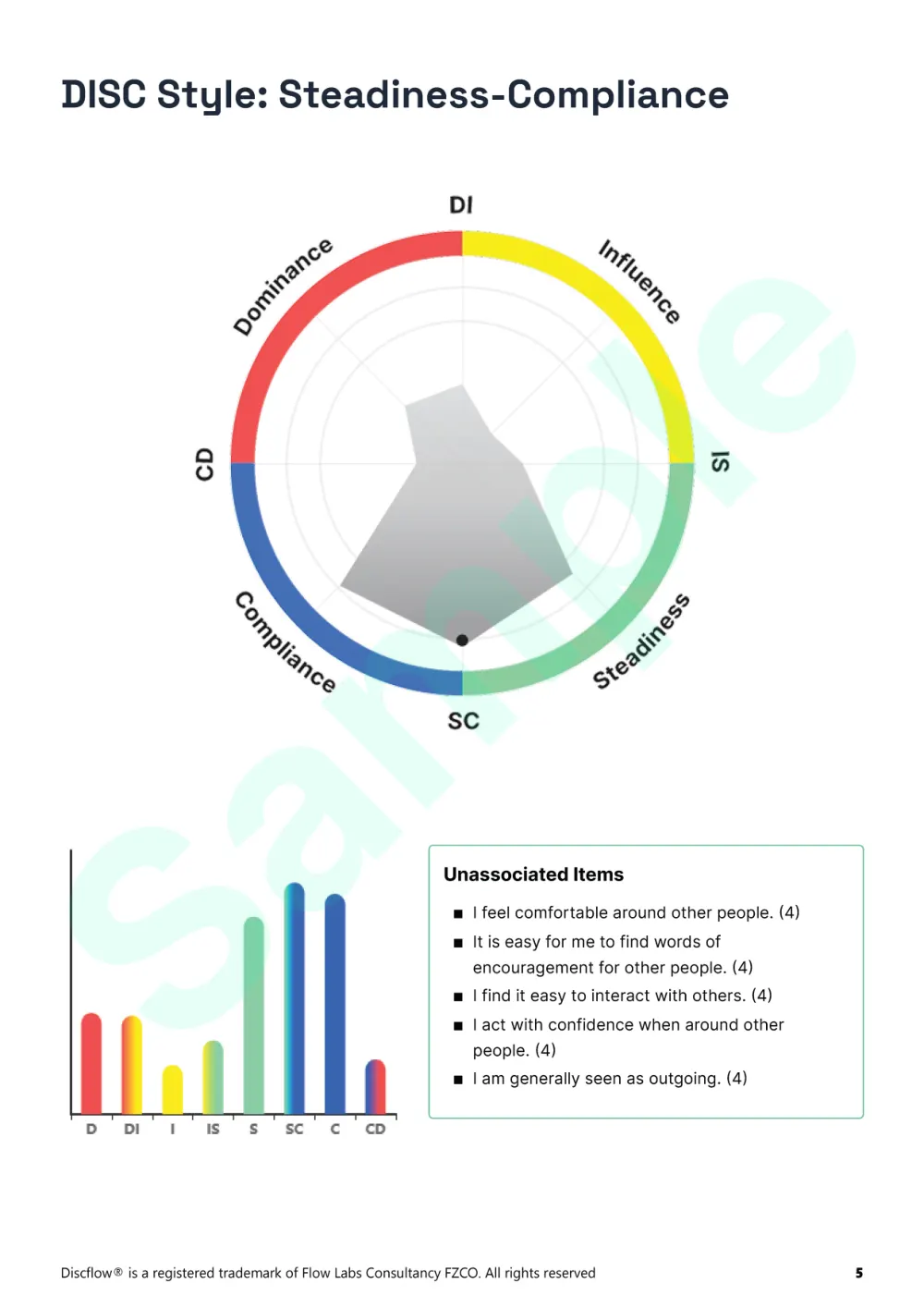
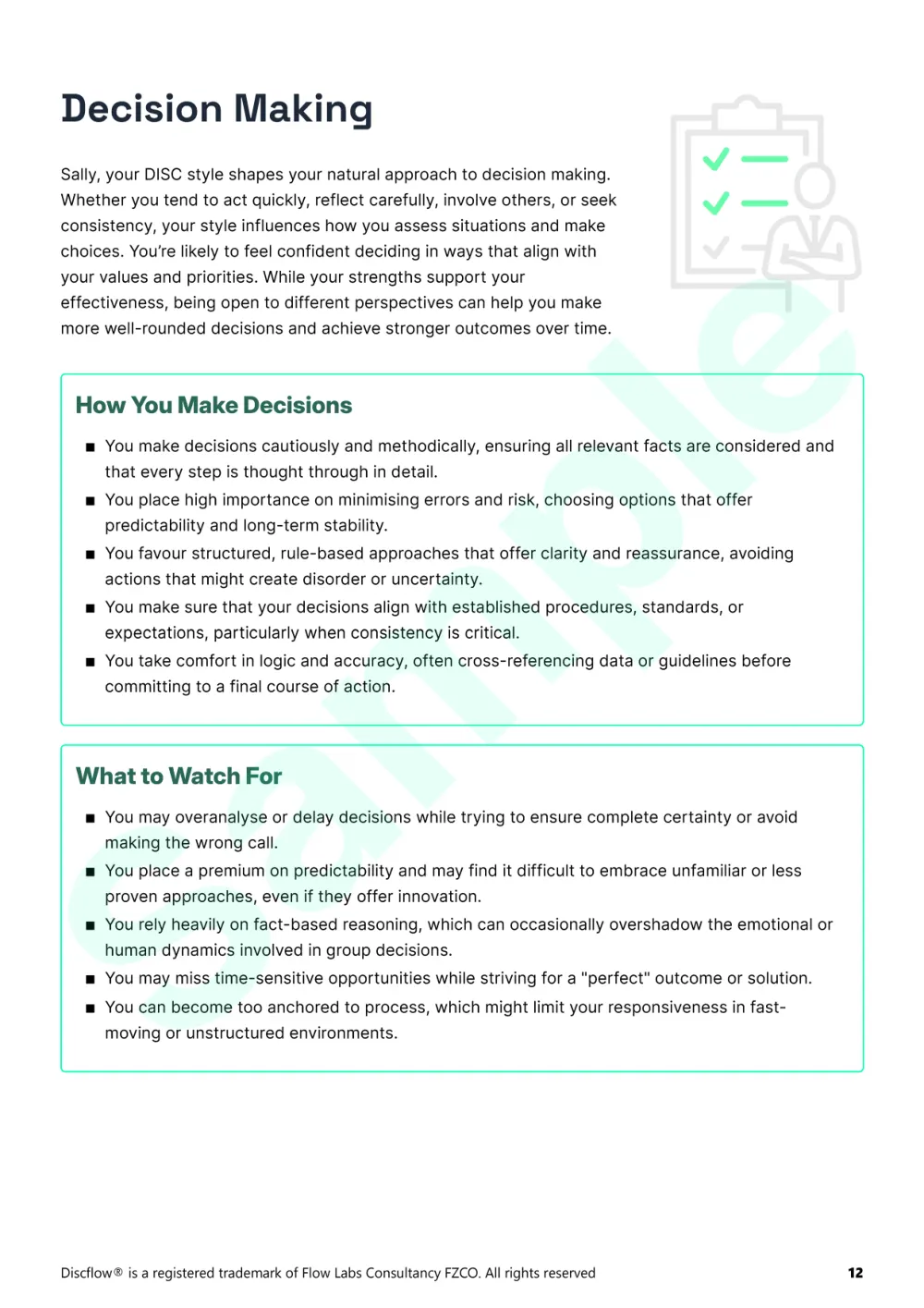
The full report suite
Every Discflow report, usable with your own clients or inside your own organization, from the day you finish.
Five ready-to-run workshops
Four-hour sessions, designed, written and tested as a commercial product. Not templates and not a starting point — sessions you could deliver next week.
Facilitation guides and debrief structures
How to run a debrief that does not collapse into a personality conversation, and what to do when it starts to.
A FlowHub platform account
Assign assessments, generate reports, and manage your own accounts — whether those are clients or colleagues.
Brand assets and materials
Collateral to take this to market under your own name, or to introduce it properly inside your own organization.
Ongoing trainer support
A direct line when a session goes somewhere you did not expect.
Two pathways
Same course, two professional worlds
The methodology is identical. What differs is the environment it is taught into, and the examples and applications used throughout.
Inside an organization
HR, L&D and OD
Building internal capability. An organizational discipline: leadership development, communication and culture work, embedding Discflow as part of a systematic capability rather than a series of external bookings.
Across client businesses
Coaches, consultants and trainers
Strengthening your professional offer. An added behavioral dimension within your client work, and something that differentiates you beyond a traditional DISC certification everyone else holds.
Cost
What it costs, and what it costs you afterwards
Certification is a one-off program, not an annual license. There is nothing to renew to keep using what you were given, and no minimum volume you have to buy to stay certified.
What you do with it afterwards is yours. Inside an organization, that means running debriefs, workshops and development work without booking an external facilitator every time. In a practice, it means setting your own fees — we sell you the reports through a token account, and what you charge for your work is entirely your decision.
Pricing depends on where in the world you are. Certification is delivered regionally, so tell us where you are based and we will come back with the rates that apply to you.
Your scope
What certification authorizes you to do
Certification qualifies you to deliver Discflow with your own clients, or inside your own organization.
From the day you finish, you can use the full report suite with anyone you work with, run debriefs and workshops, deliver the five ready-to-run sessions you are given, and set your own fees where you charge for delivery. There is no volume you have to buy and nothing to renew.
What certification does not authorize is certifying other people. That is the Master Trainer credential, and it is a separate application.
Where you're starting from
Two questions people arrive with
What you already know still applies. DISC is DISC, and nothing about your existing practice is wasted.
Then the question is not why move. It is whether adding an instrument to your practice is worth it at all.
5 questions
DISC certification questions
How do you become a DISC certified trainer?
Two routes. The open Certified Trainer course runs as regional cohorts of three 4-hour live sessions with preparation and applied work around them. In-house certification is the same course delivered privately for a group of four to twelve from one organization. Both produce the same credential.
How long does DISC certification take?
Three 4-hour live sessions spaced across consecutive weeks, with preparation before each and consolidation afterwards. Most people plan for around three weeks end to end.
How much does DISC certification cost?
Pricing depends on where in the world you are, because certification is delivered regionally. Tell us where you are based and we will come back with the rates that apply to you within one business day.
Do you need to be certified to use DISC assessments?
No. Anyone can buy and use Discflow reports. Certification is strongly recommended for anyone using them in coaching, facilitation, leadership or organizational development work, to support responsible interpretation and a consistent experience.
Can a Certified Trainer certify other people?
No. Certified Trainers are authorized to train and support end users within their organization or professional practice. Certifying other trainers requires the Master Trainer credential.
Next
Deliver Discflow yourself
Two routes in, one credential, and everything you need to run it from the day you finish — with your clients or inside your own organization.