Writing
Writing on behavioral assessment. Argument, not content marketing.
Pieces worth the time of somebody who already knows this field — practitioners, L&D leads, and buyers who have been disappointed before.
The editorial line
Workplace behavior articles: three rules we write to
Say something a competitor could disagree with. A piece nobody could argue with is a piece nobody needed. If it would sit unchanged on any vendor's site, it does not go on ours.
Write for people who already know. The audience is practitioners and L&D professionals with years behind them. "What is DISC" content is written for search engines, and it reads that way to everyone else.
Be willing to concede. Including where our own instrument is limited, where the evidence is thin, and where a competitor does something well. It is the only thing that makes the rest credible.
Planned
What we intend to write
Why everyone recognizes themselves and nothing changes
The gap between insight and application, and why it is a design problem rather than a motivation problem.
What you can and cannot re-measure after twelve months
Behavioral style is stable. Emotional intelligence is not. Getting that wrong is how development programs end up reporting noise as progress.
The five minutes before a difficult conversation
Where behavior actually changes, and why almost no development product is present for it.
What a certification is worth after the certificate
On day rates, deliverables, and the weeks of unpaid design work nobody quotes for.
Reading a psychometric claim properly
What reliability coefficients mean, what they do not, and the questions to ask any vendor including us.

Behavioral Assessments
A Simple Reflection Habit That Makes Managers Better
The best managers are not the ones who always get it right. They are the ones who notice when they get it wrong, and adjust. That capacity to step back, look honestly at how a situation went, and do something different next time has a name: reflection. And it is the habit most managers never quite build. […]

DISC & Emotional Intelligence
Managing Conflict Between Different DISC Types
Most workplace conflict is not really about the thing it appears to be about. The disagreement over a deadline, the tension in a meeting, the email that landed badly: more often than not, the real cause is not the issue itself but a clash of behavioural styles. Two people want different things from the same interaction, and neither realizes […]

Team & Leadership Development
How to Lead People Who Aren’t Like You: Adaptive Leadership with DISC
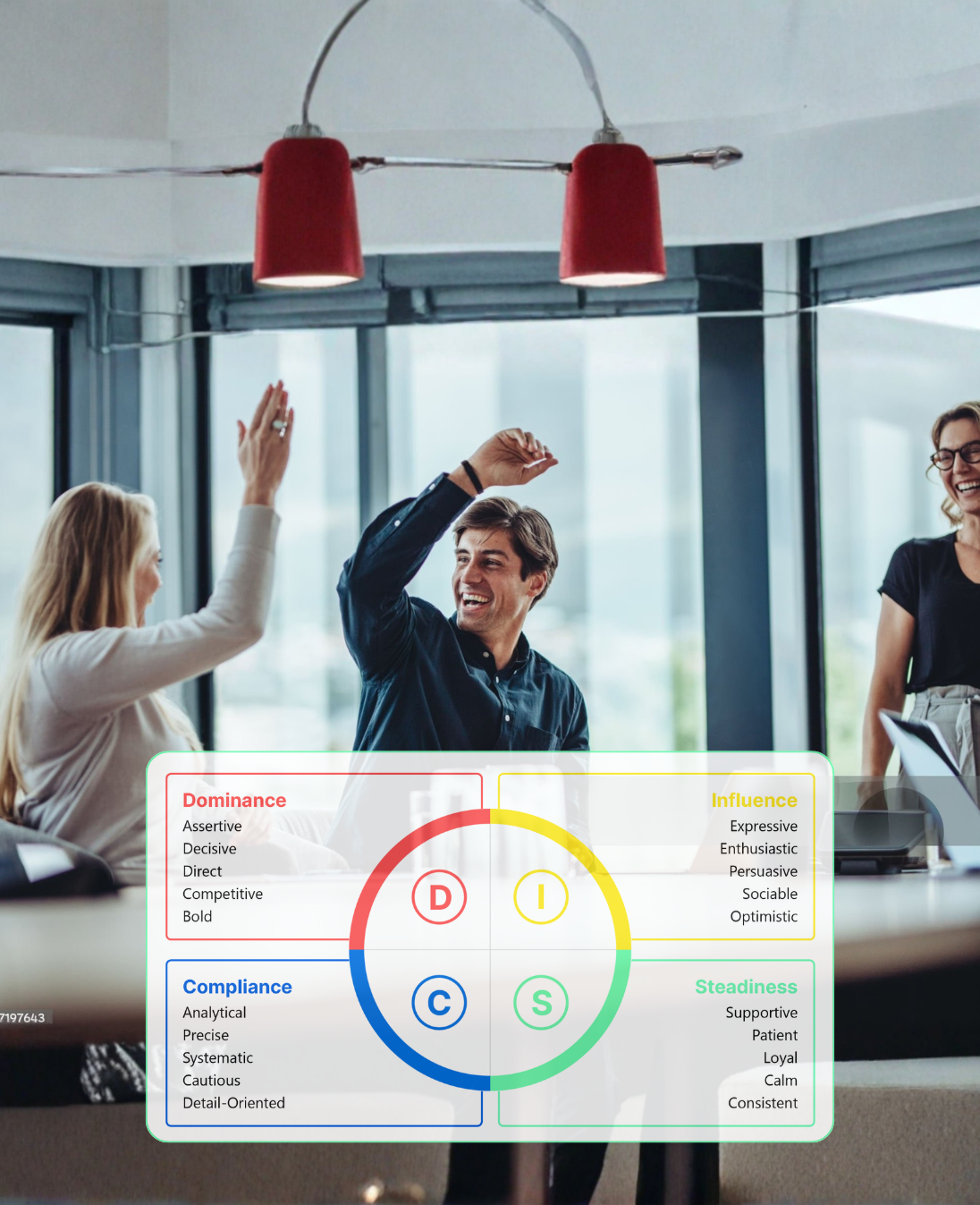
The hardest part of leadership is rarely the strategy. It is the people, and specifically the people who do not think, decide, or communicate the way you do. A leader can be excellent with the team members who share their instincts and quietly ineffective with everyone else, without ever realizing that is what is happening. Most leaders […]
DISC Assessments & Tools
Switching DISC Providers? What to Check Before You Move
Switching the behavioural tool your organization relies on is a bigger decision than it first appears. A DISC assessment is rarely just a report; it is often woven into onboarding, leadership development, coaching, and the shared language your teams already use. Moving providers without thinking it through can quietly cost you all of that. Done carefully, though, a move […]

DISC Assessments & Tools
Behavioural Intelligence: Why the DISC Report Is the Start, Not the End
Why the DISC Report Is the Start, Not the End Most organizations have no shortage of behavioural insight. People complete assessments, attend workshops, and read reports that describe them accurately. And yet behavior, the thing all of it was meant to change, often stays exactly where it was. The missing piece is not more insight. It is behavioural intelligence in the […]

DISC assessment
DISC vs 16 Personalities: Which Fits Workplace Teams Better?
If you are weighing up DISC vs 16 Personalities for your team, you are not alone. These two names come up again and again, both are widely used, and both promise to help people understand themselves and each other better. But they are built for different purposes, and for a workplace team, that difference matters. This is not […]

effective communication
Why Teams Miscommunicate: DISC Communication Styles, Explained
Most teams don’t miscommunicate because people are careless, difficult, or poorly trained. They miscommunicate because they are different — and because nobody has given them a way to see the difference clearly enough to work with it. Two people sit in the same meeting, hear the same words, and leave with two entirely different understandings of what […]

Behavioral Assessments
Introducing FlowConnect: Turning Your DISC Report Into Daily Behaviour
Most behavioural tools end at the report. FlowConnect begins where they stop. We are introducing the part of Discflow that turns what people learn about themselves into how they actually behave, in the real moments where it counts. A Discflow report has always given people a clear, integrated picture of how they work: their DISC style, their emotional drivers, and the patterns […]

Behavioural Intelligence in the Workplace
The Strengths You Already Have: Raising Team Performance When You Can’t Hire
Behavioral Intelligence and Team Performance- Getting More from the Team You Have For most of the last decade, a struggling team had a familiar fix: hire into the gap. In 2026, that option has quietly closed. With recruitment paused across much of the market, the lever leaders reached for first has been taken away, and […]
DISC Assessments & Tools
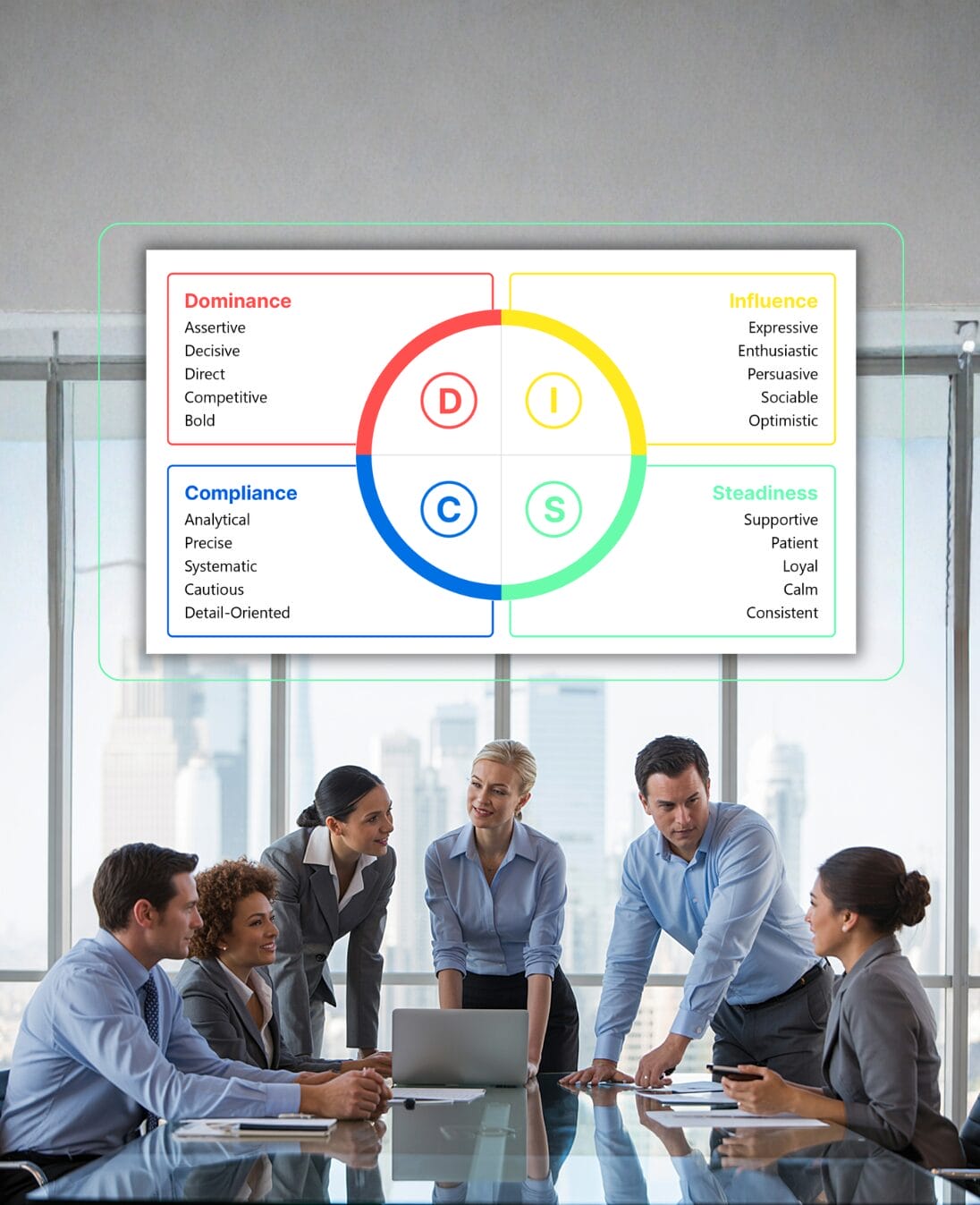
The 4 DISC Personality Types Explained
Understanding personality differences is one of the most powerful ways to improve communication and collaboration in the workplace. A DISC personality assessment provides a practical framework for exploring these differences through structured DISC personality analysis. The DISC model explained in simple terms, identifies four key behavioral tendencies that shape how individuals work, communicate, and respond […]

Behavioural Intelligence in the Workplace
Behavioral Intelligence in Leadership for Hybrid Teams | DISC Assessments & Engagement Strategy
Hybrid and global work models have transformed how organizations communicate, collaborate, and lead. As teams become increasingly distributed across locations and time zones, leaders must develop new capabilities to maintain engagement, productivity, and collaboration. While these changes have created new opportunities for collaboration and flexibility, they have also introduced new challenges for leaders. Managing hybrid […]

DISC assessment
From Self‑Awareness to Better Team Performance: DISC Assessment for Teams
From Self-Awareness to Better Team Performance For many organizations, a DISC assessment for teams has become a familiar tool in leadership development and workplace training because it gives people a simple way to understand how different behavioral styles show up at work. DISC focuses on observable workplace behaviors across four dimensions—Dominance, Influence, Steadiness, and Compliance—which […]
The honest alternative
If this is not resourced, do not launch it
A blog with five posts and a date eighteen months old says more about a company than no blog at all — and it is the first thing a careful buyer checks.
Two pieces a quarter that people forward is a better program than twelve nobody finishes. If the cadence cannot be sustained, this page should be held back and the effort put into the evidence summary and the case studies, which do more work per hour spent.
Next